

Technology should make living cheaper, not billionaires richer.
We aim to significantly reduce the cost of living by putting AI and robotics to work for humanity.
Uncost the cost of living.
Uncost is a nonprofit, nonpartisan movement that believes
living should not have a price tag.

Working harder, still falling behind.
Every figure here is a receipt — a public source, a date, and a region. This is what living actually costs, and how fast it is moving.
Point the tools at the things that keep people alive.
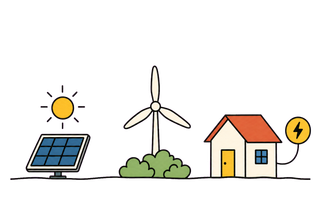
Automation, robotics and open-source tools get cheaper and better every year. We work out where they could genuinely lower the cost of essentials — housing, food, energy and more — publish exactly what it would cost and whether it actually worked, and share the results free, so communities can act on them. No jargon, no hype.
How we work →Open projects, and a dashboard for the true cost of living.
Open project packages anyone can run, and a dashboard that tracks whether the costs they target actually fall.
Open projects
DraftModels, briefs and playbooks any community can copy, adapt and run. We build the plans and the software; communities build the thing itself.
The Human Essentials Dashboard
BriefA clear, sourced picture of what living actually costs, region by region, and how it’s changing over time.
We start with the sectors where the money actually goes.
Fifteen sectors cover everything a person needs. Year one concentrates on the three where the pressure is heaviest — Shelter, Food and Energy — with Water next.
All fifteen sectors →

If we can’t show where a number came from, we don’t print it.
Every figure here carries its source, its date and its region. Negative results are published as prominently as wins. Everything we produce is open for anyone to use, free — and a person, not an algorithm, is accountable for every claim.
The most useful thing you can do takes ten seconds.
Sign the pledge
Free, and the single most useful small act — because scale is the argument.
Get updates
Occasional, sourced, no spam.
Volunteer
We need people to verify figures, review sources, research sectors and translate. Write to contact@uncost.org.
One milestone at a time.
Dates are targets. Evidence sets the pace.
See the roadmap →Add your name.
Living should not have a price tag. If you think that’s worth testing, join us to help Uncost the cost of living.